| buyutilitybill@gmail.com | WhatsApp: +1 (209) 822-2425 | Telegram: @utilitytempsupport |

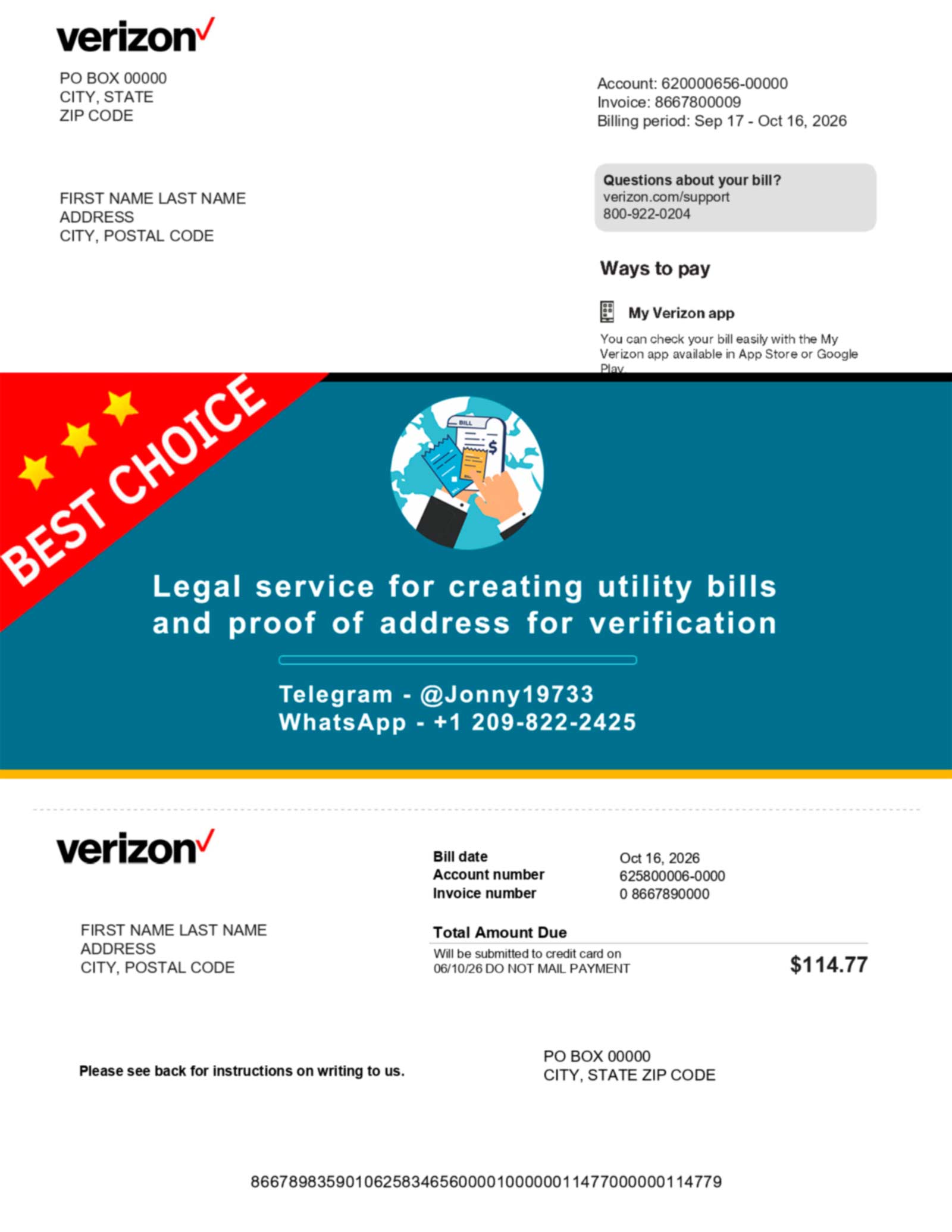
Verizon Utility Bill Template (US)
Telecom statement layout with service itemization, usage sections, and total due summary.
View Verizon Template →Frequently requested telecom & phone bill template layouts — tap an image or use the button to open the page.
Telecom statement layout with service itemization, usage sections, and total due summary.
View Verizon Template →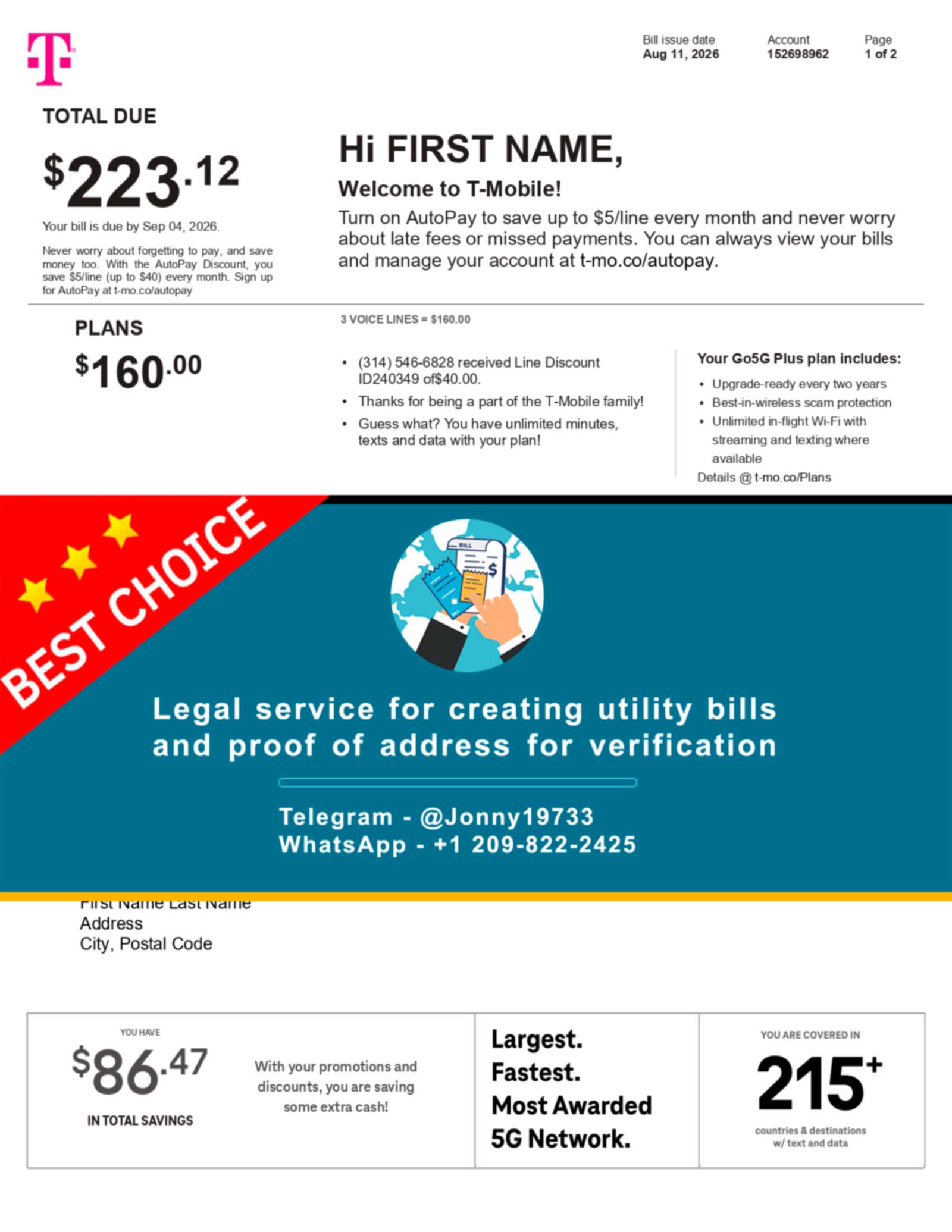
Mobile provider billing layout with usage summary, plan blocks, and totals group.
View T-Mobile Template →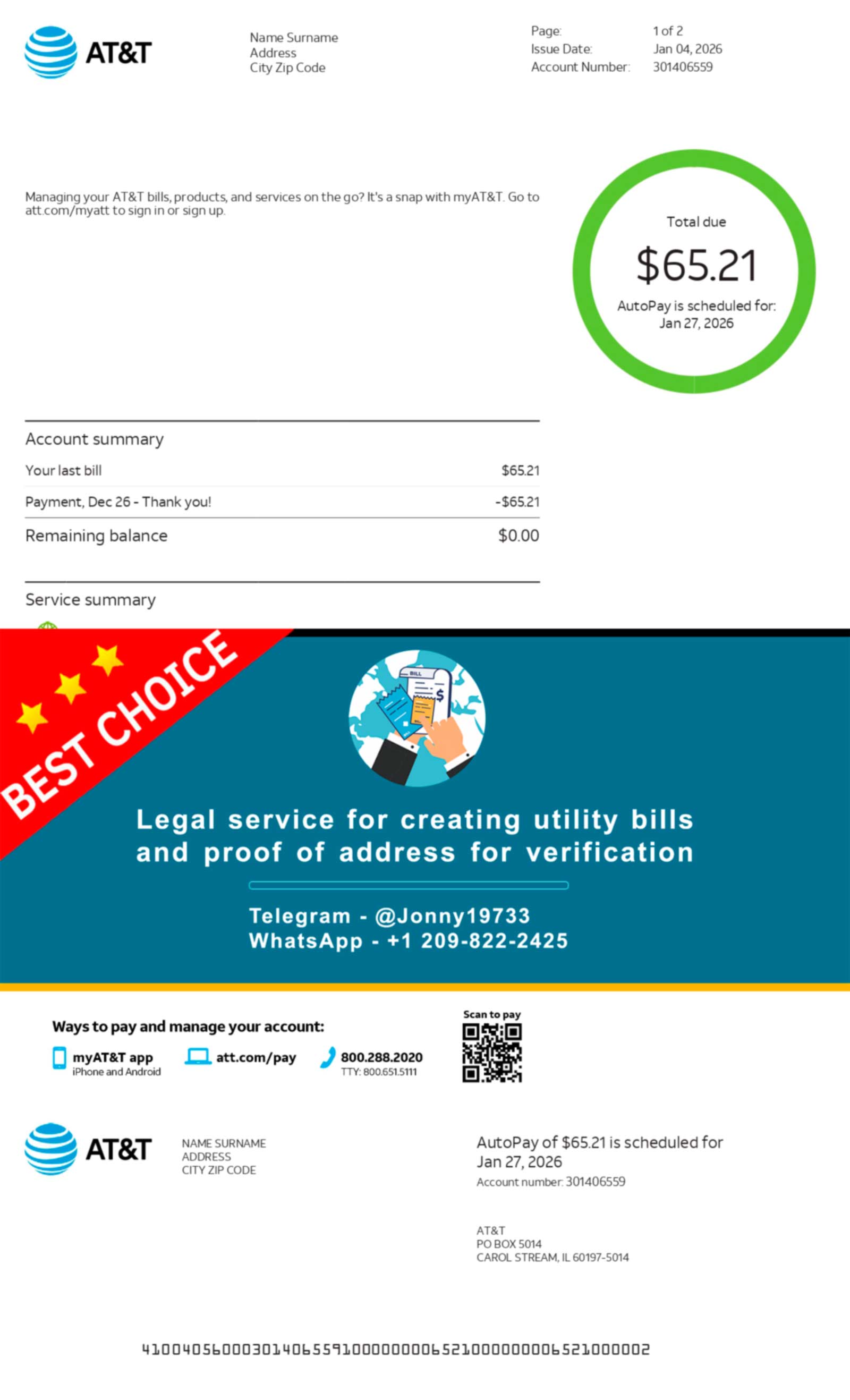
ISP and phone billing layout with plan details, itemized services, and totals panel.
View AT&T Template →Phone bills in the United States are commonly used as routine account statements that summarize telecommunications usage, service plans, and related charges over a defined billing period. These documents are typically issued on a recurring basis and are designed to present account information in a clear, structured format that supports review and record-keeping. While the general purpose of phone bills is consistent nationwide, the exact layout, terminology, and visual presentation can vary depending on regional practices, service frameworks, and administrative standards.
This page provides a country-level reference overview of how phone bills in the United States are commonly structured from a document layout and formatting perspective. It is intended as an educational and design-oriented guide rather than official documentation. Individual phone bill formats may differ significantly across states, service territories, and billing platforms.
Phone bills issued in the United States are designed to summarise telecommunication services such as voice plans, data usage, messaging, and recurring charges within a defined billing period. While the underlying purpose is consistent nationwide, the visual structure and organisation of these documents can vary depending on billing systems and presentation conventions. The references below provide illustrative examples of U.S. phone bill layouts, viewed strictly from a document format perspective.
These phone bill layout references are intended for educational and comparative use only, helping readers understand how the structure and presentation of telecommunications billing documents can differ across billing platforms within the United States.
Most U.S. phone bills follow a multi-section layout that organizes information into clearly defined blocks. Content is usually presented in a top-down hierarchy, allowing readers to locate key details without scanning the entire document.
A common structural pattern may include an upper section containing account identifiers and billing dates, followed by a central area dedicated to service usage and plan details. A lower section often summarizes charges, adjustments, and total amounts for the period. This layered approach reflects general document design conventions used across many recurring account statements in the United States.
The structure is intended to balance completeness with readability, grouping related information together while separating descriptive details from numerical summaries.
Phone bills in the United States typically display a range of informational elements, although the presence and labeling of specific fields can vary. Commonly shown items may include account reference information, the billing cycle timeframe, and a summary of services associated with the account.
Usage-related sections often present aggregated data rather than detailed call-by-call logs, especially in modern layouts. Charges may be grouped by category, such as service fees, usage-based amounts, or additional line items. Taxes and surcharges are usually listed separately to distinguish them from base service costs.
It is important to note that not all phone bills display the same level of detail. Some formats prioritize high-level summaries, while others include expanded breakdowns depending on administrative or regional practices.
U.S. phone bills are generally presented in English and use standard U.S. conventions for dates, numerical formatting, and currency display. Billing periods are commonly shown using month-day-year date formats, and monetary amounts are expressed in U.S. dollars.
From a visual standpoint, many layouts emphasize clear headings, consistent alignment, and the use of whitespace to separate sections. Tables or column-based layouts are frequently used to align usage figures and charges, supporting quick comparison across line items.
These formatting characteristics reflect broader document design norms within the United States and may evolve over time as presentation standards change.
Visual clarity plays an important role in the design of phone bills, as these documents often contain multiple categories of information within a limited space. Structured spacing, consistent typography, and clear section labels help readers navigate the document efficiently.
Design choices are typically aimed at reducing ambiguity by visually distinguishing descriptive text from numerical data. This focus on readability supports general comprehension of the document’s structure, regardless of the specific services or plans referenced.
While visual conventions are common, they are not uniform across all formats, and individual layouts may emphasize certain elements more prominently than others.
Phone bills in the United States are frequently distributed as digital documents, often in PDF format or as static image files. These formats are well suited to preserving layout consistency across devices and platforms, ensuring that spacing, alignment, and visual hierarchy remain intact.
From a layout perspective, PDFs and images are commonly designed to mirror traditional printed statements, even when accessed electronically. This approach supports familiarity and ease of reference, particularly for archival or record-keeping purposes.
The choice of format reflects technical and administrative preferences rather than any standardized requirement.
Although there are shared structural conventions at the national level, phone bill formats can differ across regions within the United States. Variations may appear in terminology, section ordering, or the level of detail provided in usage summaries.
State-level or regional pages often address these differences in greater depth, offering more specific context about local formatting practices. This country-level overview is intended to prepare readers for those variations rather than replace more detailed regional references.
For more specific layout references, you may explore state or regional phone bill format pages, where available:
Phone billing documents are used internationally to present information about voice services, data usage, messaging activity, and recurring plan charges within a defined billing period. Although this page focuses on phone bill layout references specific to the United States, reviewing broader international layout patterns can help place U.S. documents within a wider structural context.
For an expanded perspective on how phone billing documents are commonly organised across different countries and telecom systems, readers may consult the international phone billing document layout overview . This global reference highlights general formatting approaches and presentation logic observed beyond a single national framework.
Comparing U.S.-based phone bill layouts with global reference examples allows readers to better distinguish between universally recurring document sections and elements shaped by regional or market-specific billing practices.
This page provides illustrative references to common phone bill layout and formatting patterns in the United States. It does not represent official utility bills and is not affiliated with any telecommunications provider. Acceptance, verification, or approval of any document is not guaranteed. All examples and descriptions are provided for educational, informational, design, demonstration, and novelty purposes only.
 MOBILE_FILTER_BUTTON_TEXT