| buyutilitybill@gmail.com | WhatsApp: +1 (209) 822-2425 | Telegram: @utilitytempsupport |

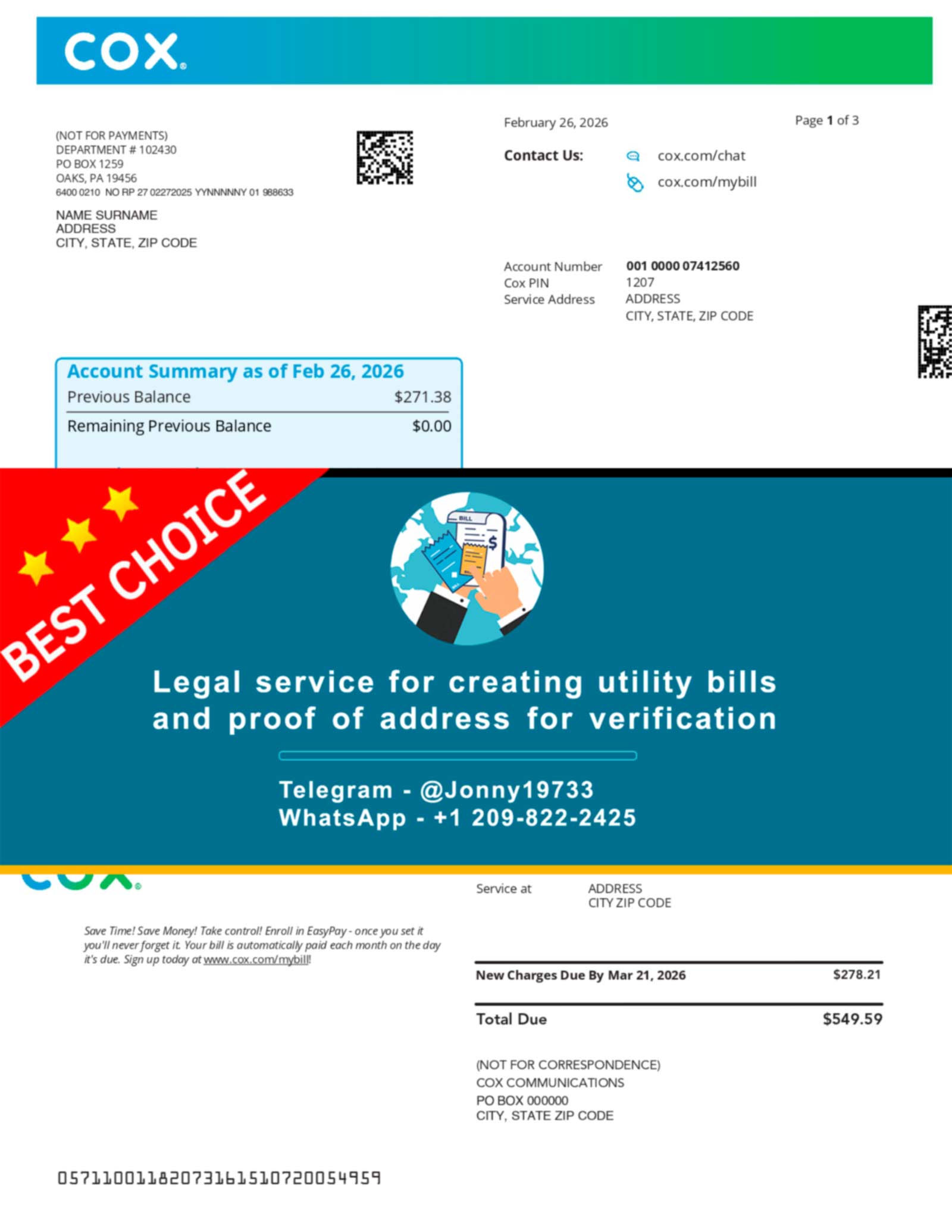
Cox Bill Template (US)
Telecom-style statement layout with service line items, fees placement, and total due summary.
View Cox Template →Top requested telecom statement template layouts — click an image or use the button to open the product page.
Telecom-style statement layout with service line items, fees placement, and total due summary.
View Cox Template →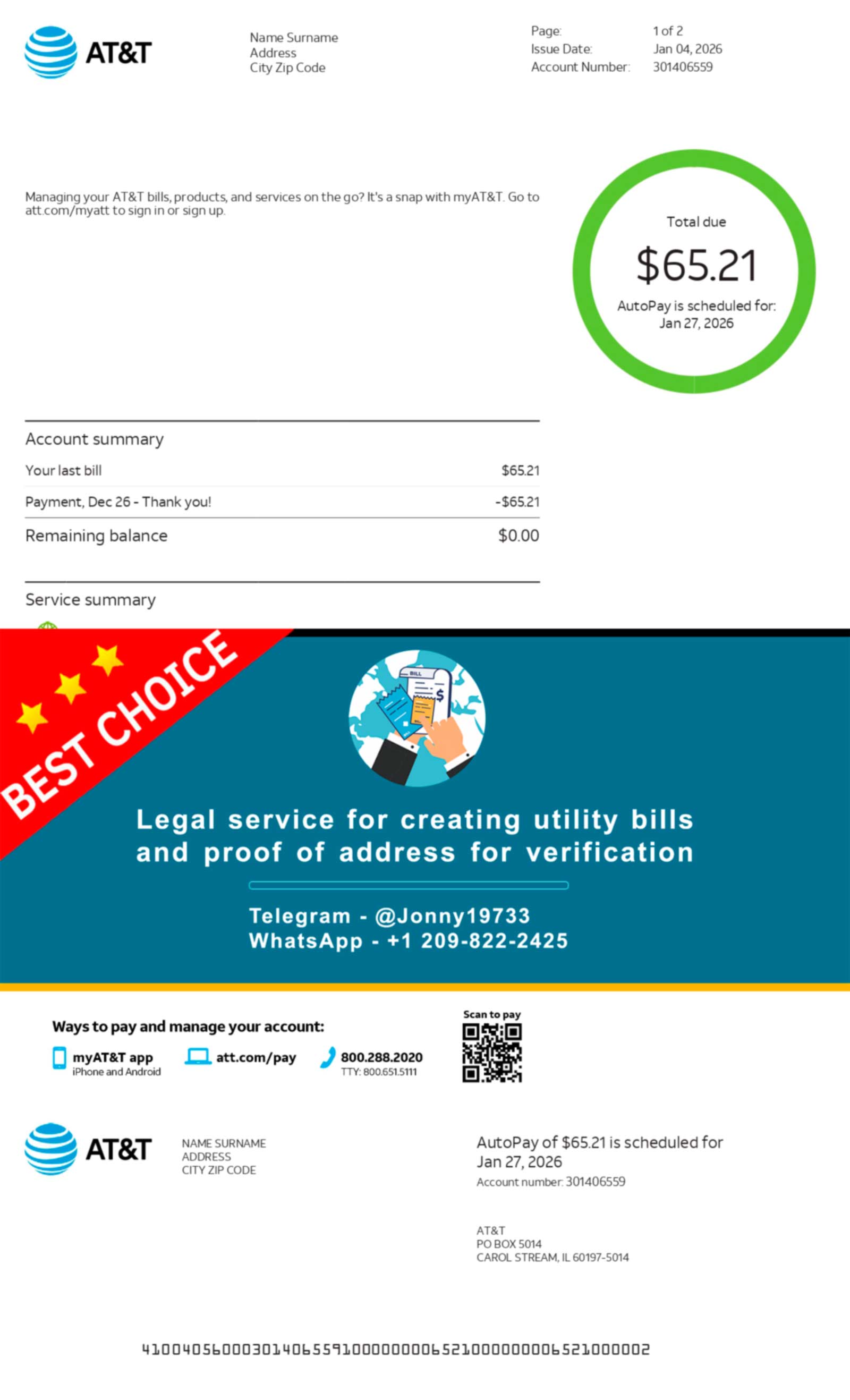
Internet billing layout reference with plan summary blocks, taxes/fees grouping, and totals.
View AT&T Template →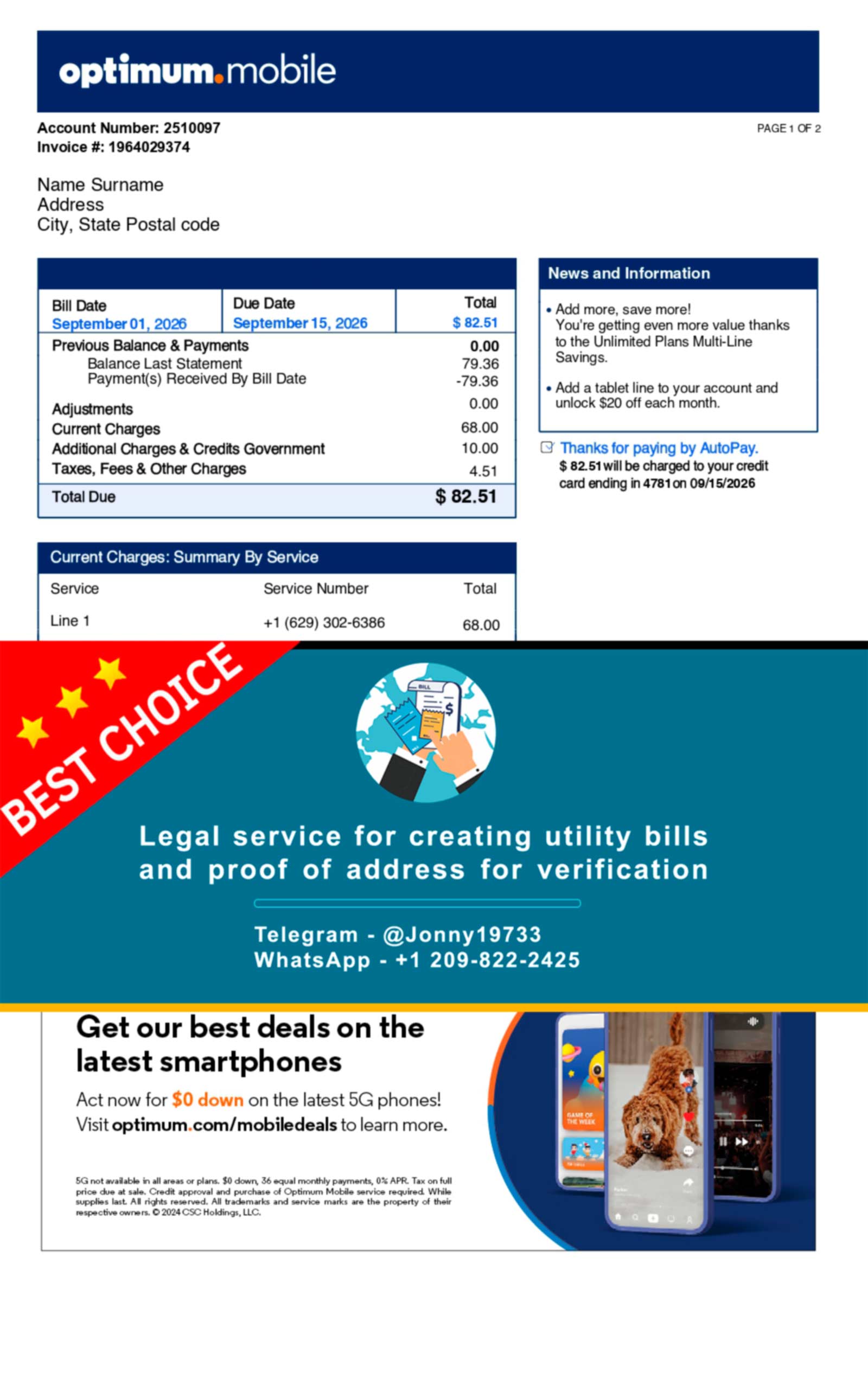
Mobile/ISP statement formatting with billing period placement, discounts area, and totals panel.
View Optimum Template →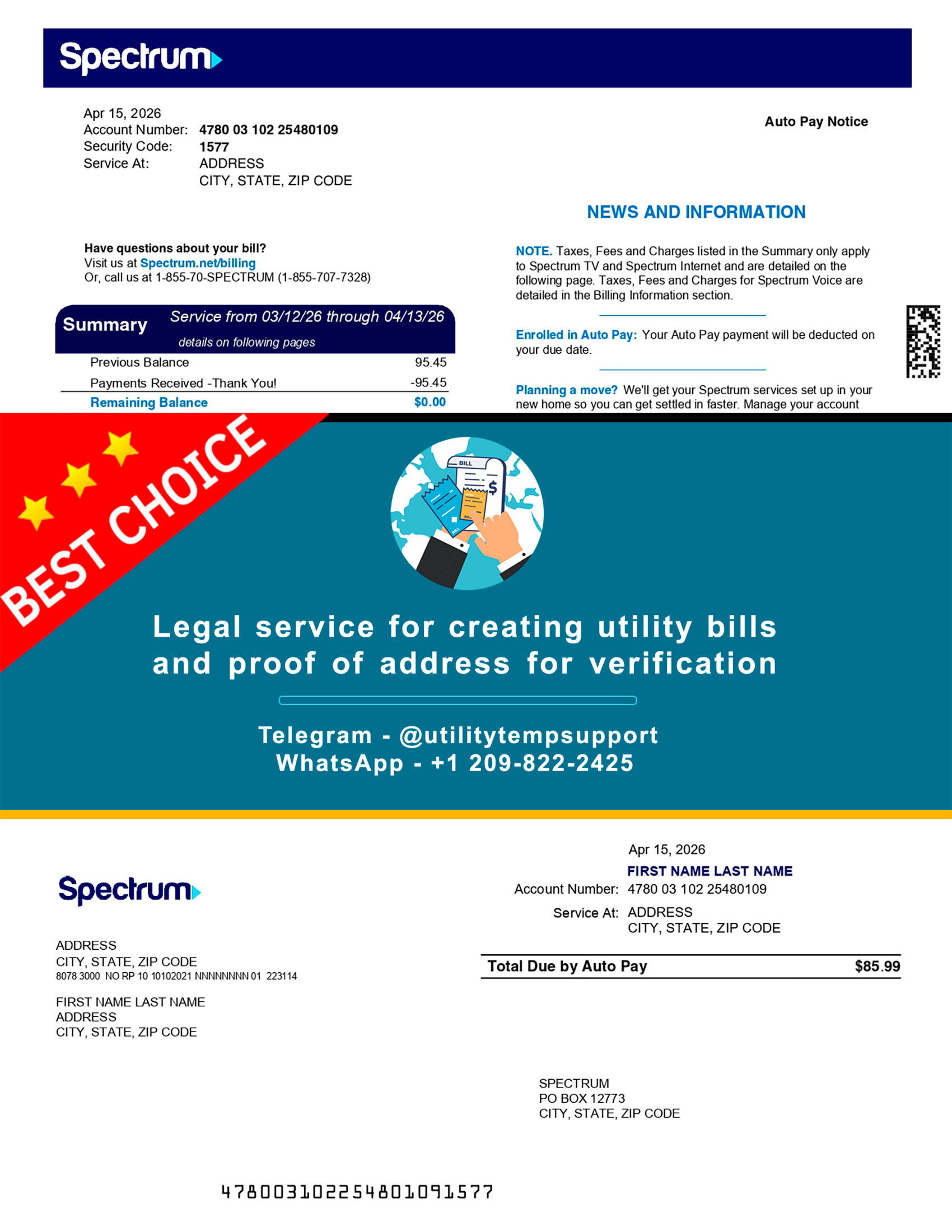
Cable/internet style layout with bundled services, itemized charges, and payment summary blocks.
View Spectrum Template →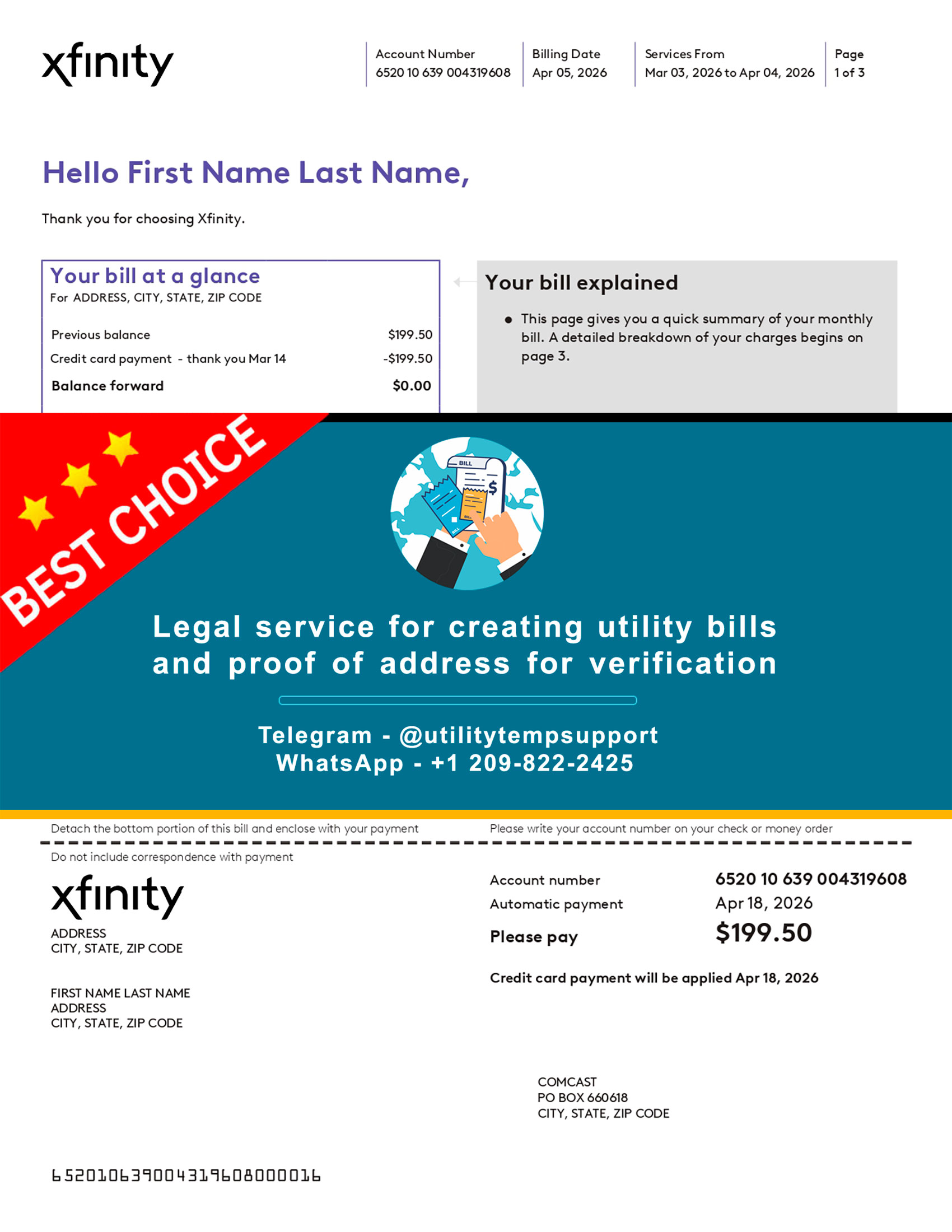
Comcast-style statement layout with account summary hierarchy, fees grouping, and total due.
View Xfinity Template →Internet bills in the United States are commonly issued as recurring account statements that summarize broadband or internet service usage, subscription details, and related charges for a defined billing period. These documents are typically provided on a monthly basis and serve as informational records outlining how service fees are calculated and presented.
While the overall purpose of internet bills is broadly consistent nationwide, the visual layout, terminology, and organization of information can vary depending on regional practices, service models, and administrative standards. This page provides a country-level reference overview of how internet bills in the United States are commonly structured from a document layout and formatting perspective. It is intended as an educational and design-oriented reference rather than official documentation. Individual internet bill formats may differ significantly across regions, service environments, and billing platforms.
Most U.S. internet bills follow a structured, multi-section layout designed to organize account details, service information, and charges in a clear and readable format. Information is generally presented in a top-down hierarchy, allowing readers to identify key details without reviewing the entire document.
A typical layout often begins with an upper section that includes basic account identifiers, such as the customer name, service address, and billing period. This is usually followed by a central section that outlines service descriptions and recurring charges. A lower portion of the document commonly summarizes totals, balances, and payment-related references. This layered structure reflects general document design conventions used across many billing statements in the United States.
Internet bills in the United States typically present a range of informational elements related to the service provided. While the exact fields and labels may vary, commonly displayed information may include:
The presence, order, and naming of these elements can differ depending on regional practices and billing systems. As such, no single layout should be considered universal or standard across all U.S. internet bills.
From a country-level perspective, internet bills in the United States tend to follow certain general formatting conventions. Documents are typically presented in English, use U.S. date formats, and display monetary values in U.S. dollars. Billing periods are most often shown on a monthly basis, with clear start and end dates indicated near the top of the document.
Visually, many U.S. internet bills favor a clean, column-based layout that separates descriptive information from numerical values. Headings and section dividers are often used to distinguish service details from totals and payment summaries. These characteristics reflect broader administrative and document design norms rather than fixed requirements.
Clarity and readability are central considerations in the design of internet billing documents in the United States. Layouts are commonly structured to reduce visual clutter and help readers quickly locate essential information, such as service descriptions and total charges.
Consistent spacing, aligned columns, and clearly labeled sections contribute to the overall usability of the document. While design approaches vary, the general emphasis is on presenting complex billing information in a way that is accessible and easy to interpret, regardless of the reader’s familiarity with billing terminology.
Internet bills in the United States are frequently delivered in digital formats, most commonly as PDF documents. Image-based formats may also be used in certain contexts. These formats are selected for their ability to preserve layout consistency, ensure legibility across devices, and support straightforward viewing or printing.
The choice of format is typically related to administrative preferences and delivery methods rather than the underlying structure of the bill itself. Regardless of format, the core layout elements and information groupings generally remain consistent within a given billing system.
Although this page outlines country-level patterns, internet bill formats in the United States can vary across states and regions. Differences may arise due to local administrative practices, service frameworks, or regional presentation preferences. These variations can affect terminology, section ordering, and visual styling.
For this reason, country-level references serve as a general orientation rather than a definitive guide. Users seeking more localized insights may benefit from reviewing region-specific format references where available.
For additional context and more localized examples, explore regional internet bill format references within the United States. These pages provide further insight into how layouts and presentation details may differ at the state or regional level.
Internet billing documents issued across the United States generally serve the same purpose of summarising service plans, billing periods, and usage-related information. However, the way this information is visually structured and prioritised can differ by state, provider system, and regional billing practices. The references below present illustrative examples of internet bill layouts at the state level, focused strictly on document format and presentation.
These state-level internet bill layout references are provided for educational and comparative purposes only, helping readers understand how document structure and formatting may vary across different U.S. jurisdictions and billing systems.
Internet billing documents are issued globally to outline service plans, billing cycles, and account-level details, yet their visual structure and informational flow can differ notably across regions and markets. Although this page concentrates on internet bill layout references specific to the United States, placing these documents within a broader international context can provide additional clarity.
To explore how internet billing layouts are commonly organised across different countries and service environments, readers may also review the cross-regional internet billing document layout overview . This global reference highlights recurring structural patterns observed internationally, helping to contextualise U.S. internet bill formats without implying standardisation.
Examining both U.S.-focused and international internet bill layout references together makes it easier to understand which formatting elements are widely shared across markets and which reflect region-specific billing conventions.
This page provides illustrative layout and format references for educational, informational, design, and demonstration purposes only. It does not issue official internet bills and is not affiliated with any utility or service provider. Acceptance, verification, or approval of any document format is not guaranteed. All examples are high-level references intended to explain common structural patterns rather than official or provider-specific documentation.
For broader context, you may also refer to general internet bill format references available through the global utility hub.
 MOBILE_FILTER_BUTTON_TEXT