| buyutilitybill@gmail.com | WhatsApp: +1 (209) 822-2425 | Telegram: @utilitytempsupport |
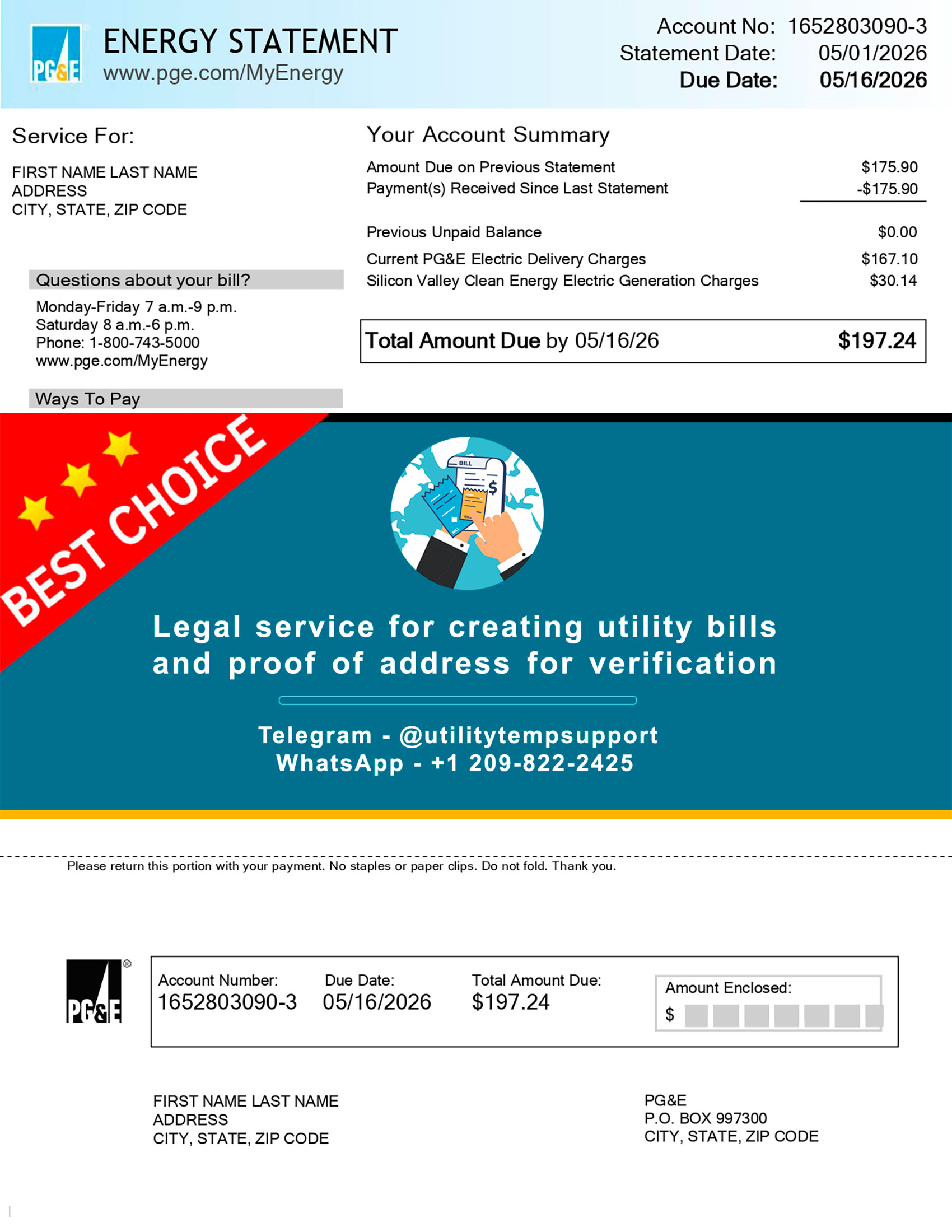
PG&E Utility Bill Template (US)
California-style statement layout with clear usage section and total due summary area.
View PG&E Template →
Top requested US utility bill template layouts — click an image or use the button to open the product page.
California-style statement layout with clear usage section and total due summary area.
View PG&E Template →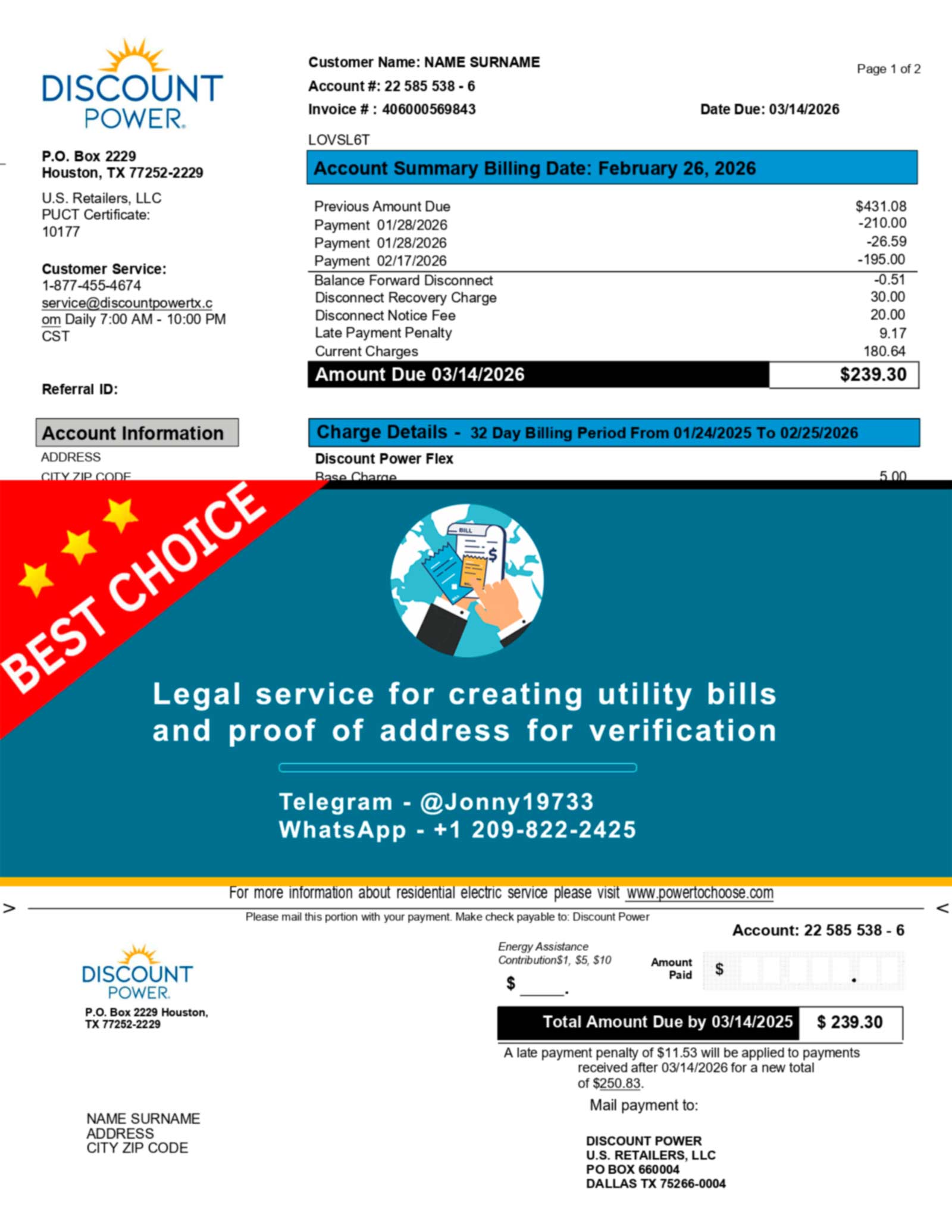
Texas layout reference featuring rate lines, charge grouping, and payment summary positioning.
View Discount Power Template →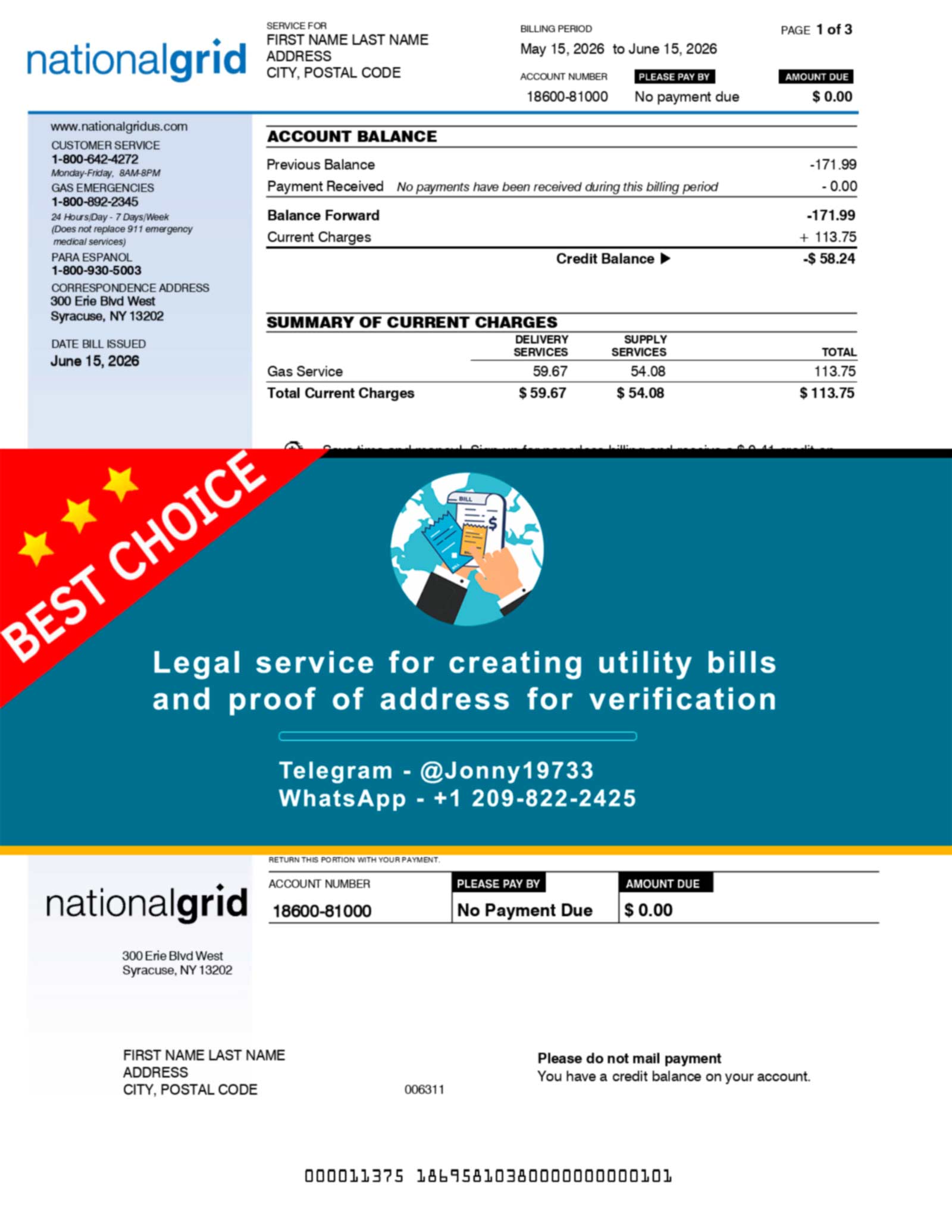
Northeast-style bill formatting with account header blocks and a prominent amount due panel.
View National Grid Template →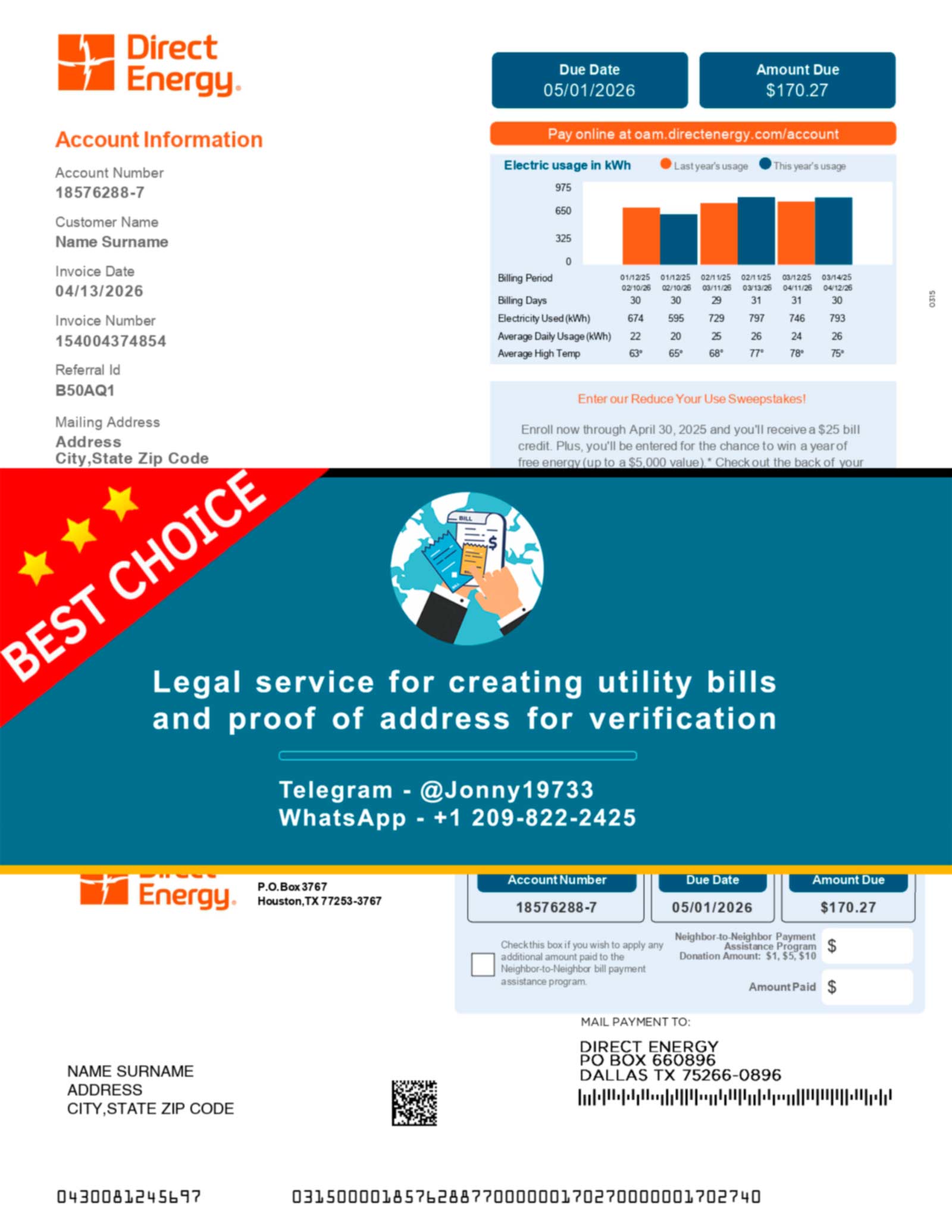
Structured US statement layout with usage breakdown, line-item charges, and totals summary.
View Direct Energy Template →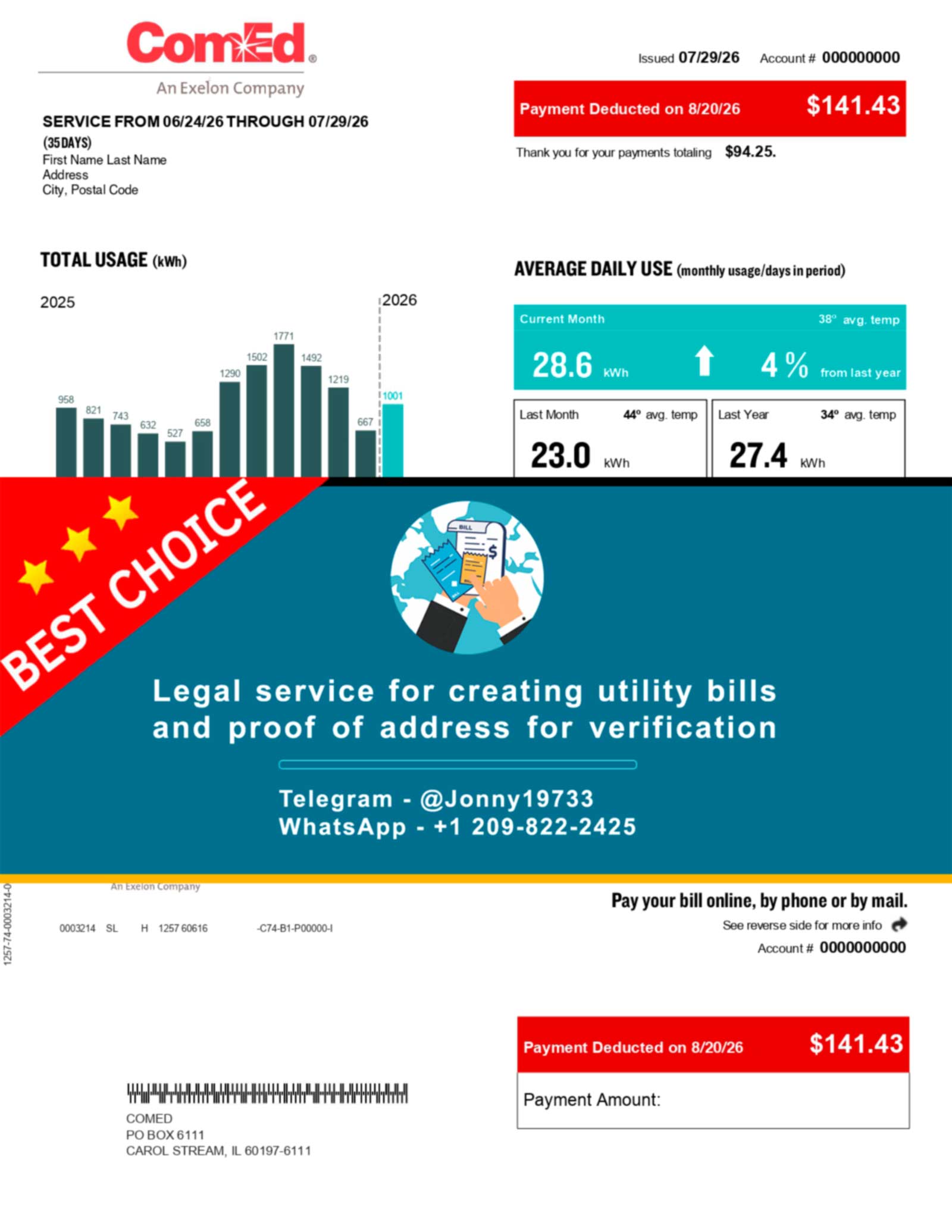
Illinois-focused statement formatting with clear service period and charges grouping blocks.
View ComEd Template →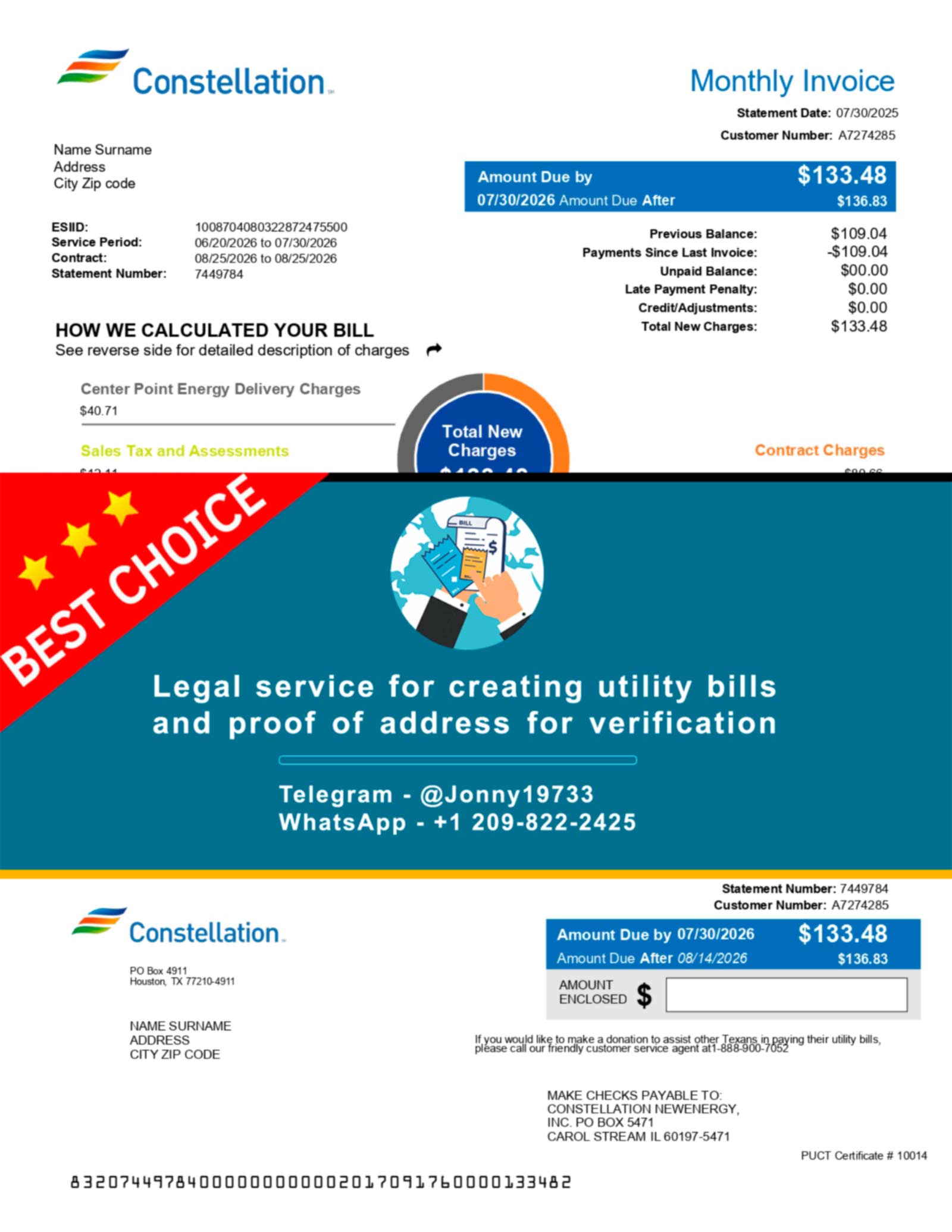
Invoice-style US layout reference with editable sections for charges, taxes, and totals.
View Constellation Template →Electricity bills in the United States are widely used as routine account statements that summarize household or commercial electricity usage over a defined billing period. While the underlying purpose is consistent nationwide, the visual layout, terminology, and presentation of information can differ depending on regional practices, service frameworks, and administrative preferences.
This page provides a country-level reference to how electricity bills in the United States are commonly structured from a document layout and formatting perspective. It is intended as an educational overview of typical patterns rather than an official or provider-specific guide. Individual electricity bill formats may vary significantly across states, service territories, and billing platforms.
Most U.S. electricity bills follow a multi-section layout designed to separate account identification, usage details, and payment-related information into clearly defined areas. Information is usually presented in a top-down hierarchy, allowing readers to quickly locate key details without reviewing the entire document.
A common structure often includes:
This layered approach supports readability and reflects general document design conventions used across many billing statements in the United States, though exact placement and labeling can vary.
While no single format applies universally, electricity bills in the United States typically display several categories of information that help contextualize usage and charges. These elements are usually presented using tables, labeled fields, or grouped blocks rather than continuous text.
Commonly shown information may include:
The presence, order, and level of detail for each field can differ based on regional practices or administrative standards, and not all bills display the same data in the same way.
Electricity bill formats in the United States reflect several country-level conventions that influence how information is displayed visually. These characteristics are not regulatory requirements but commonly observed patterns.
Examples of such characteristics include:
Visual emphasis is often placed on summary totals and billing periods, with secondary details presented in smaller tables or sub-sections.
Electricity billing documents follow a broadly similar purpose worldwide, yet their structure, terminology, and visual organisation can differ significantly depending on regional regulations, billing systems, and administrative practices. While this page focuses specifically on electricity bill layouts used within the United States, readers may also find value in reviewing how electricity billing documents are structured in a broader international context.
For a wider, cross-regional perspective on how electricity bills are commonly organised from a document layout and formatting standpoint, you can consult the global electricity bill format reference overview . This higher-level resource brings together general layout principles observed across multiple countries and regions, helping to place U.S. electricity bill formats within a global structural framework.
Using both references together allows for a clearer understanding of which layout elements are broadly consistent across electricity billing documents worldwide, and which features tend to vary based on regional or national billing practices.
Clarity and organization are central to the design of electricity bill documents in the United States. Layouts are typically structured to reduce visual complexity by separating informational content into distinct blocks, often supported by lines, spacing, or background shading.
This emphasis on readability helps users distinguish between informational sections without requiring interpretation of dense text. Headings, labels, and alignment play a key role in guiding the reader through the document, regardless of the specific service arrangement.
Electricity bills in the United States are commonly distributed in digital formats such as PDF or static image files. From a formatting perspective, these formats preserve layout integrity and visual hierarchy across different devices and viewing environments.
PDF layouts often mirror printed statements, maintaining consistent spacing, fonts, and alignment. Image-based formats may present the same information in a fixed visual form, emphasizing layout appearance rather than interactive elements. The choice of format does not imply suitability for any particular platform or use case.
Although this page describes country-level patterns, electricity bill formats in the United States are not uniform nationwide. Regional differences can arise due to administrative practices, state-level frameworks, or localized billing systems.
Variations may include:
For this reason, country-level references should be viewed as a general orientation rather than a definitive representation of all regional formats.
For more localized references, you may explore state or regional electricity bill format pages where available. These pages provide additional context on how layouts may differ within specific parts of the country.
Electricity bills issued across the United States follow broadly similar administrative principles, yet their visual structure, section ordering, and information emphasis often vary by state and billing system. The references below present state-level electricity bill layout examples intended to illustrate these structural differences from a document format and presentation perspective only.
These state-level electricity bill layout references are provided for educational and comparative purposes, helping readers understand how document structure and presentation can differ across U.S. jurisdictions without implying standardisation or official use.
This page provides illustrative, educational references to common electricity bill layout patterns in the United States. It does not represent official utility bills and is not affiliated with any electricity provider or billing authority. Acceptance, verification, or approval of any document is not guaranteed. All examples and descriptions are intended solely as general format references.
