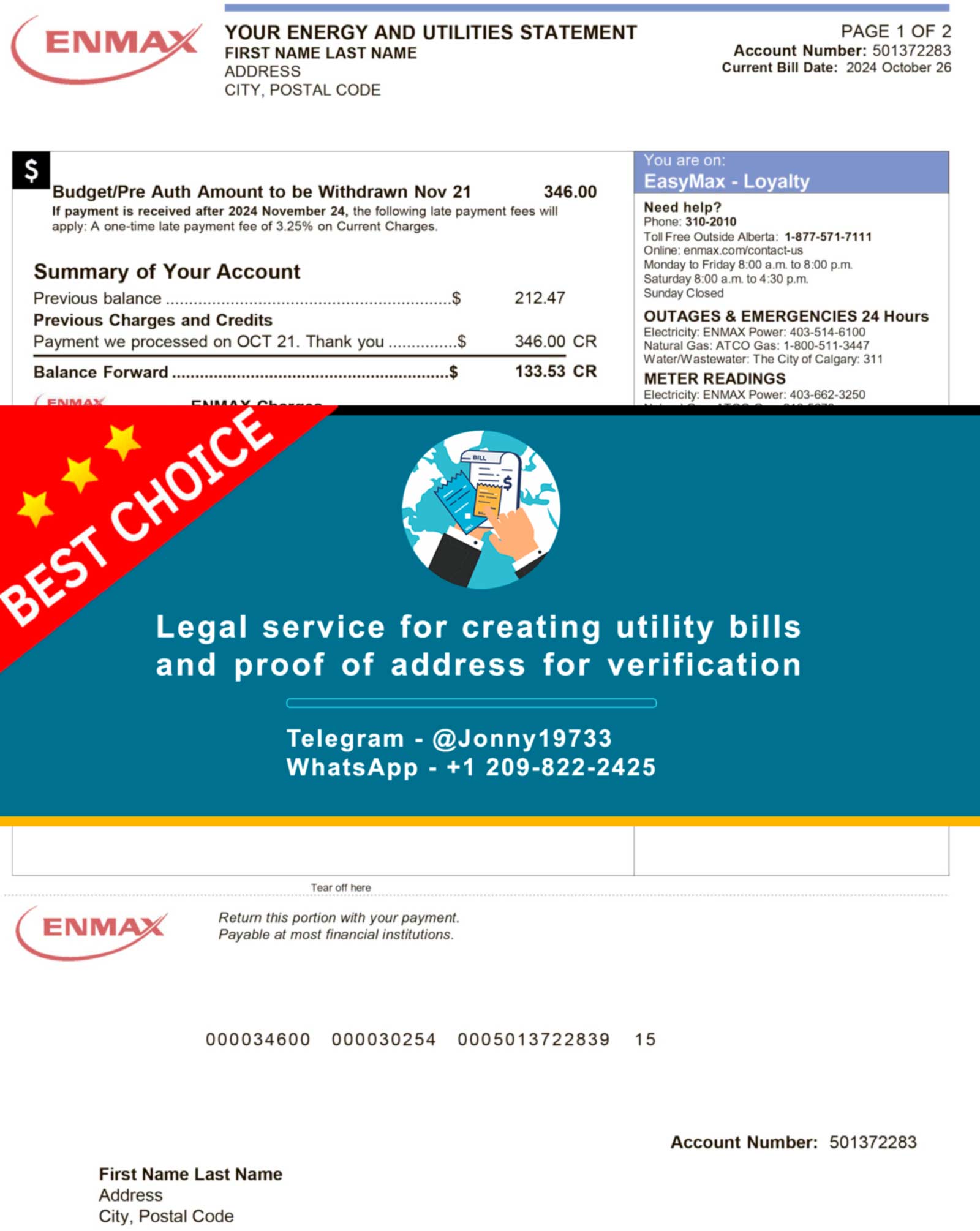
Electricity bills in Canada serve as routine account statements that summarise electricity consumption and related charges over a defined billing period. These documents are commonly used by households and businesses to review usage patterns, understand billed amounts, and reference account details associated with an electricity service. While the fundamental purpose of an electricity bill is broadly consistent across the country, the structure, terminology, and visual presentation can vary depending on provincial systems, administrative practices, and billing platforms.
This page provides a Canada-specific, high-level reference to how electricity bills are commonly structured from a layout and document-format perspective. It does not represent official documentation, regulatory standards, or provider-specific requirements. Instead, it offers an educational overview of typical formatting conventions observed across Canadian electricity billing documents, recognising that individual layouts may differ significantly.
Typical Structural Layout of Electricity Bills in Canada
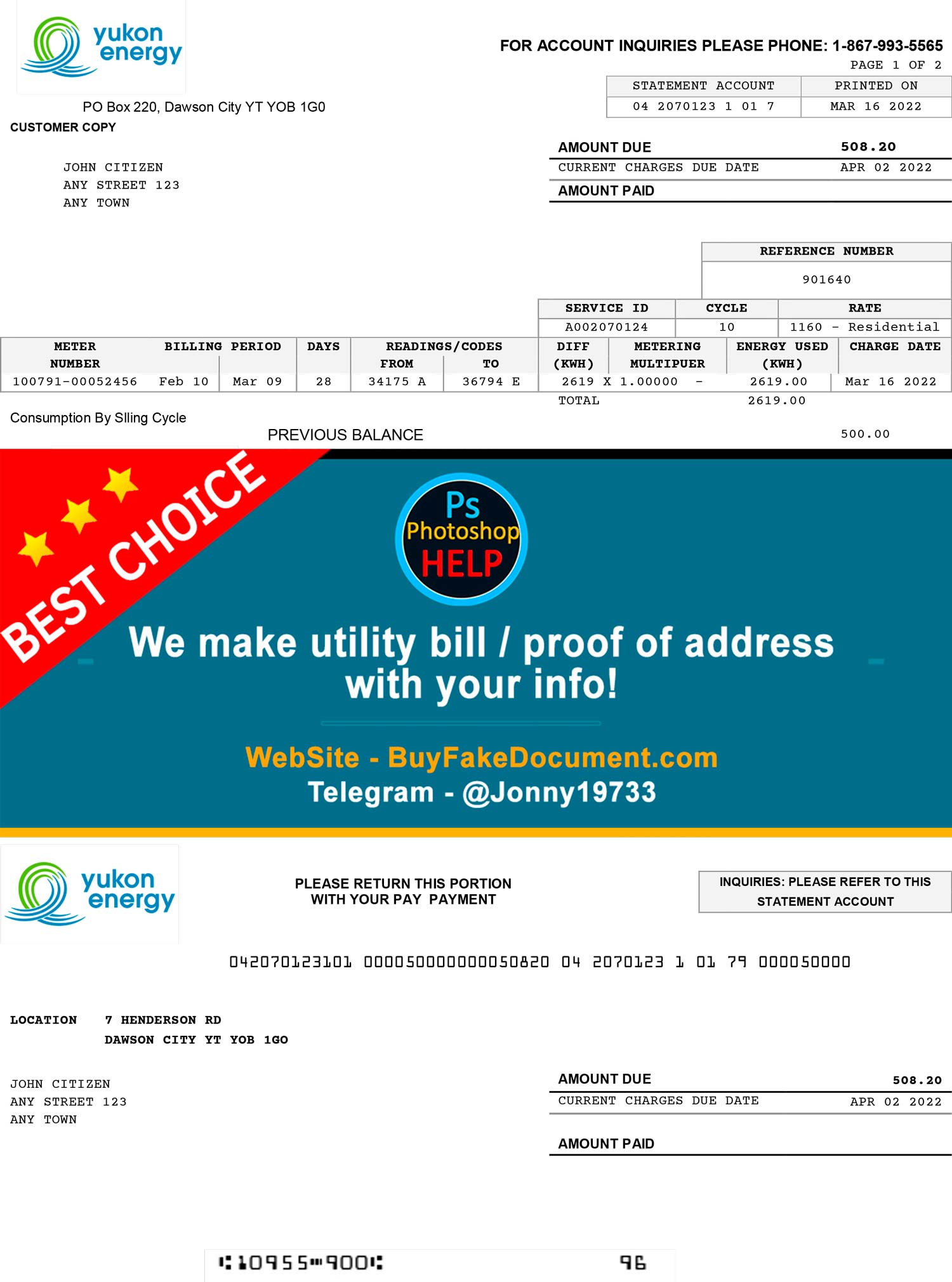
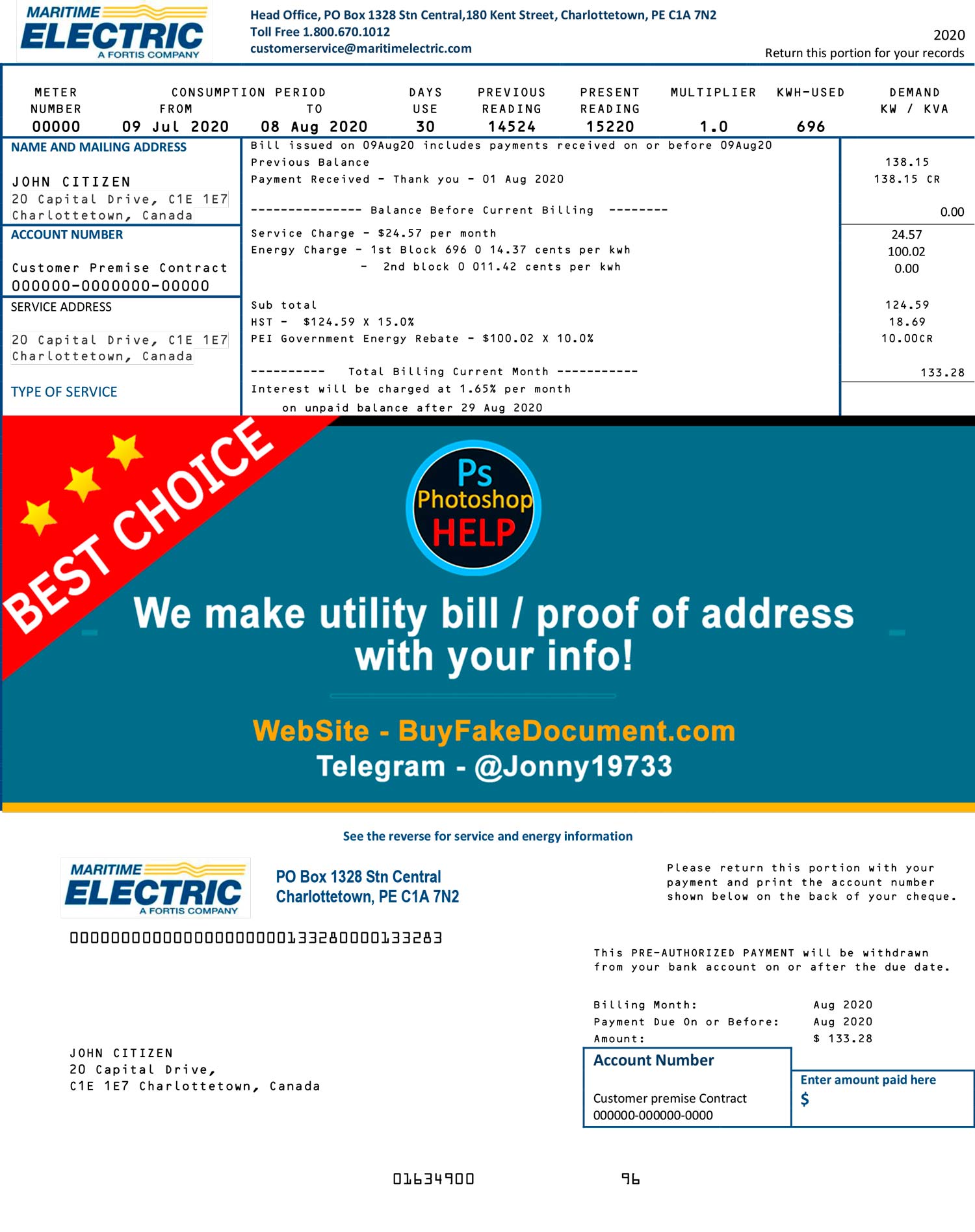
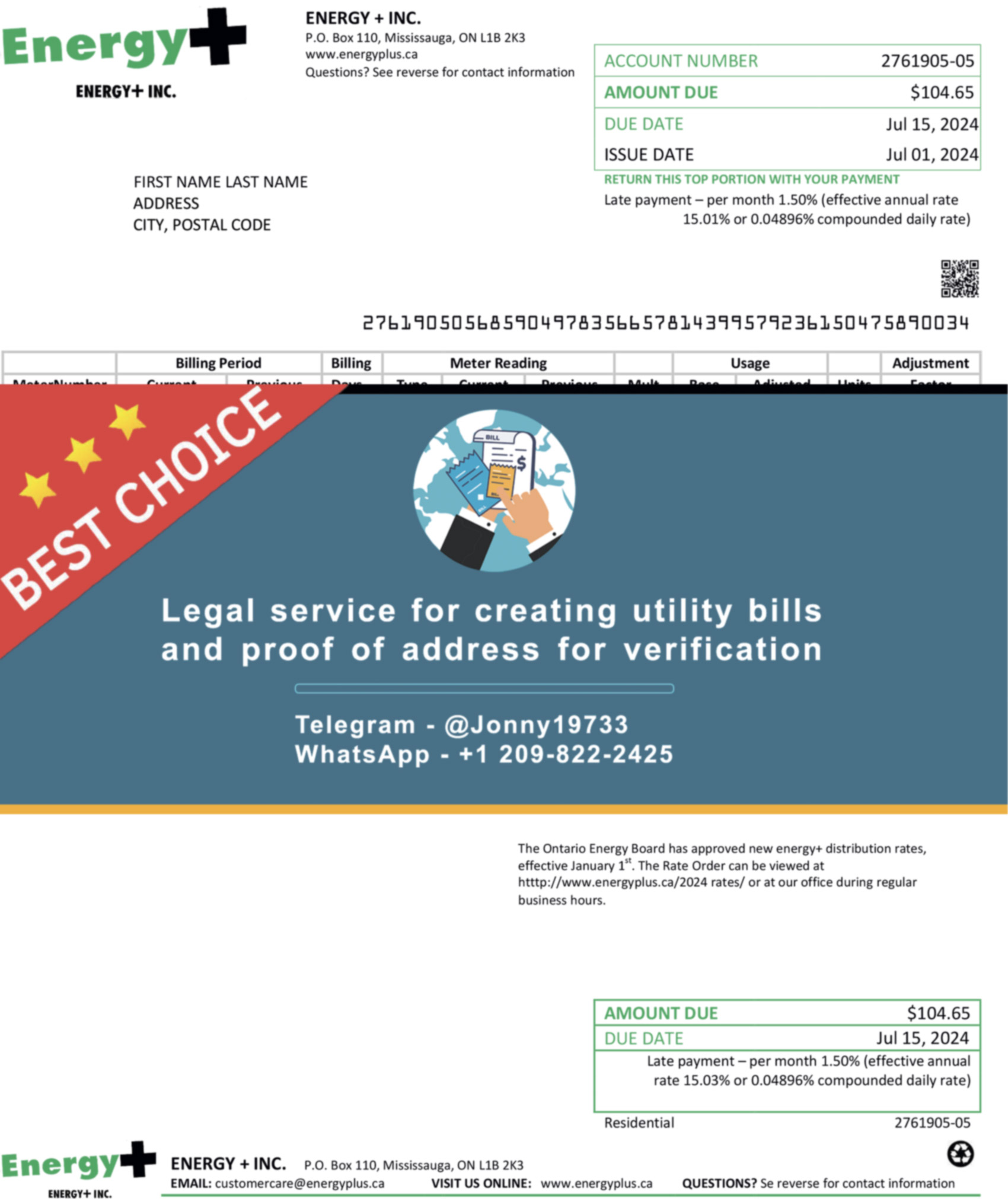
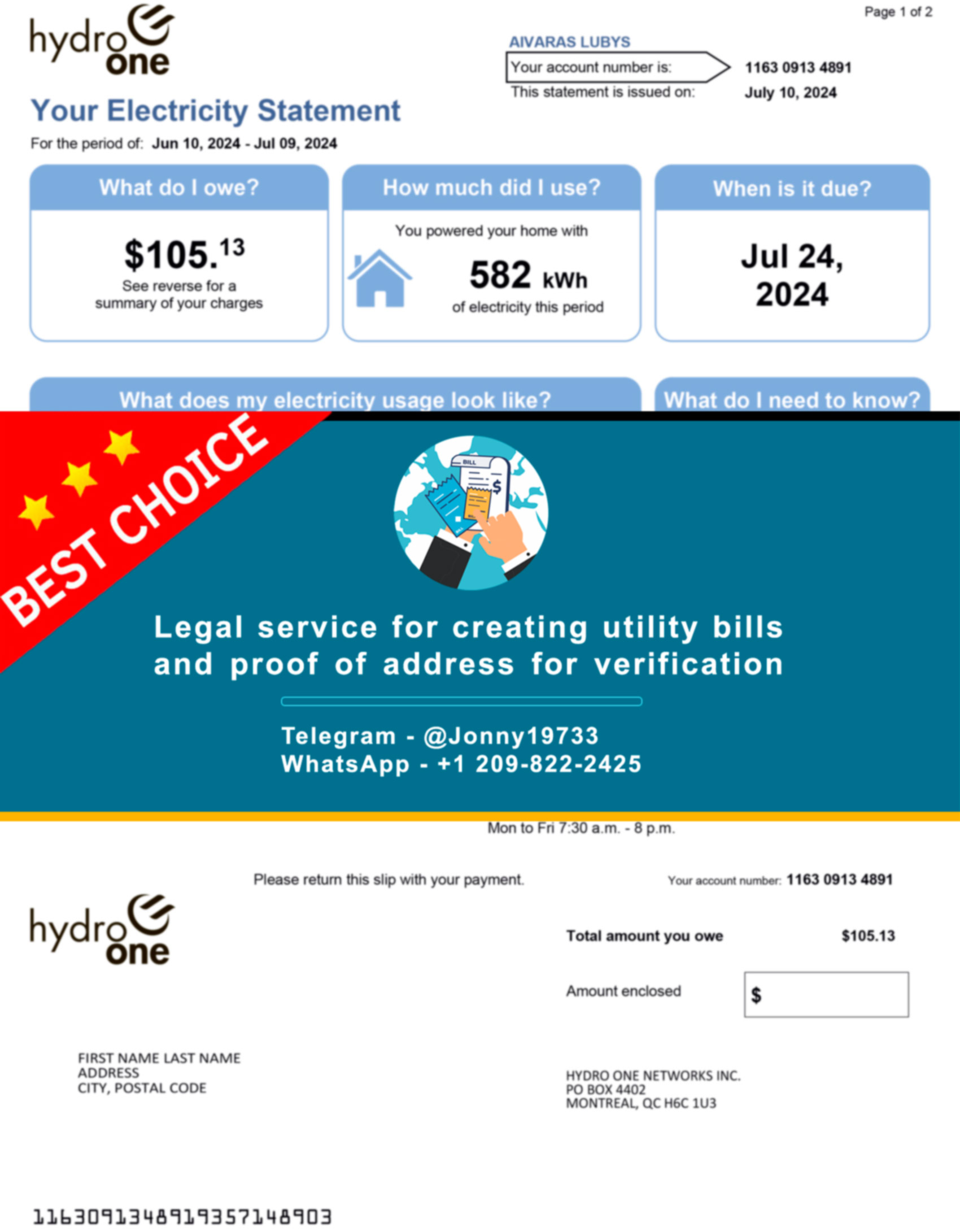
Electricity bills in Canada are often organised using a clear vertical hierarchy designed to guide the reader through account information, usage details, and billing summaries in a logical sequence. Most layouts follow a multi-section structure, with information grouped into distinct areas rather than presented as a continuous block of text.
A common structural pattern may include an upper section dedicated to account identification, followed by one or more central sections that outline usage and billing calculations, and a concluding area that summarises charges and payment references. Visual separators such as spacing, lines, or shaded blocks are frequently used to distinguish these sections and improve readability.
Rather than prioritising dense data presentation, Canadian electricity bill layouts often emphasise clarity and scannability, allowing readers to quickly locate key figures without reviewing the entire document in detail.
Information Commonly Displayed on Canadian Electricity Bills
While the specific data elements shown on electricity bills can vary, many Canadian formats include a recurring set of informational categories presented in a consistent order. These elements are typically displayed using descriptive labels and grouped according to their function within the document.
Commonly observed information may include account identifiers, service period dates, usage summaries, and itemised charge sections. Usage information is often presented separately from financial totals, with intermediate calculations shown to explain how billed amounts are derived. Additional reference details, such as service addresses or meter identifiers, may also appear depending on the billing system.
It is important to note that not all electricity bills display the same fields, and the presence, naming, or placement of specific data points can differ across provinces and billing platforms.
Canada-Specific Formatting and Presentation Characteristics
Canadian electricity bill formats often reflect country-specific presentation conventions rather than a single national standard. One common characteristic is the use of measurement units appropriate to electricity consumption, presented in a clear and legible manner alongside usage figures. Billing periods are typically displayed using date ranges that align with monthly or bi-monthly cycles, depending on the system in use.
In some cases, bilingual or multi-language elements may be present, reflecting Canada’s broader linguistic environment. Visual design choices tend to prioritise neutrality, with restrained use of colour and an emphasis on legibility over decorative elements. Fonts are generally simple and consistent, supporting clear differentiation between headings, values, and explanatory text.
These formatting characteristics are not universal, but they represent patterns frequently observed across Canadian electricity billing layouts.
Document Readability and Layout Clarity
Readability is a central consideration in many electricity bill layouts used in Canada. Information is typically arranged to minimise visual clutter and reduce the cognitive effort required to interpret billing details. Headings and sub-headings are often used to label sections clearly, while numerical data is aligned in columns or tables to support comparison.
White space plays an important role in separating content areas, helping readers distinguish between usage information, charges, and reference details. Explanatory notes, when included, are usually placed near the figures they describe, rather than grouped separately, reinforcing contextual understanding.
This emphasis on layout clarity supports the document’s function as an informational statement rather than a dense technical record.
File Formats Commonly Used for Utility Bill Layout References
From a document-format perspective, electricity bills in Canada are commonly distributed or archived in standard digital formats. Portable Document Format (PDF) files are frequently used due to their consistent rendering across devices and platforms. Image-based formats may also be encountered in certain contexts, particularly for scanned or archived records.
These file formats are discussed here purely in relation to layout reference and visual structure. Their mention does not imply suitability, acceptance, or use for any specific purpose beyond illustrative document formatting analysis.
Regional Variation Across Canada
Electricity billing layouts in Canada can vary notably between provinces and regional systems. Differences may appear in section ordering, terminology, visual emphasis, and the level of detail provided within usage or charge summaries. Local administrative practices and legacy billing platforms can also influence how information is presented.
As a result, no single electricity bill format should be considered representative of all Canadian contexts. This page is intended to serve as a national-level orientation, preparing readers for more granular provincial or regional references that explore these variations in greater detail.
Explore Regional Electricity Bill Format References in Canada
Where available, more specific references may be provided at the provincial or regional level to illustrate how electricity bill layouts differ within Canada. These pages focus on structural and formatting distinctions rather than provider-specific implementations.
Disclaimer and Compliance Notice
This page and all related materials are provided strictly for educational, informational, design, demonstration, and novelty purposes. The website does not issue, reproduce, or recreate official electricity bills and is not affiliated with any utility provider or regulatory body. No verification, approval, or acceptance is implied or guaranteed. All examples and descriptions are illustrative layout references only, and actual electricity bill formats may differ.
For broader context beyond Canada, readers may also refer to
General electricity bill format references,
which provide global, country-agnostic overviews of common utility bill layout patterns.